News Center
Why Does Your Bearing Shift? Look at the Ring
2026-10-29
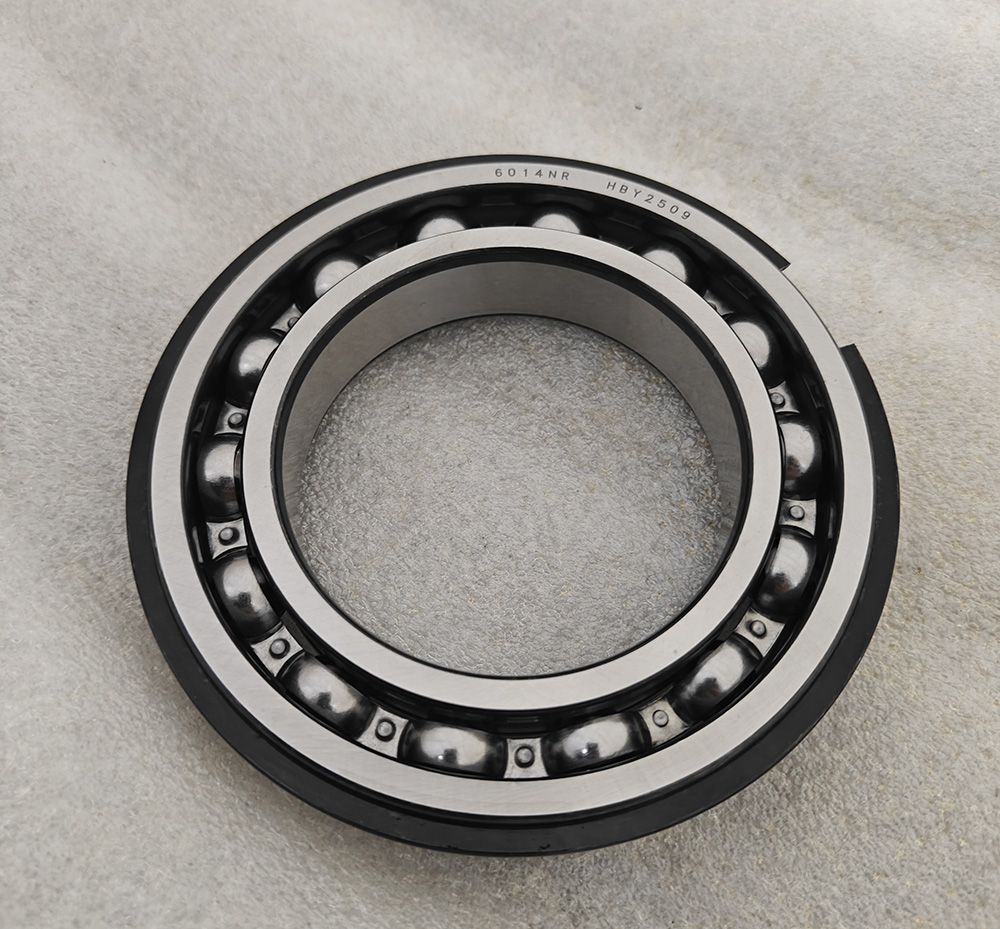
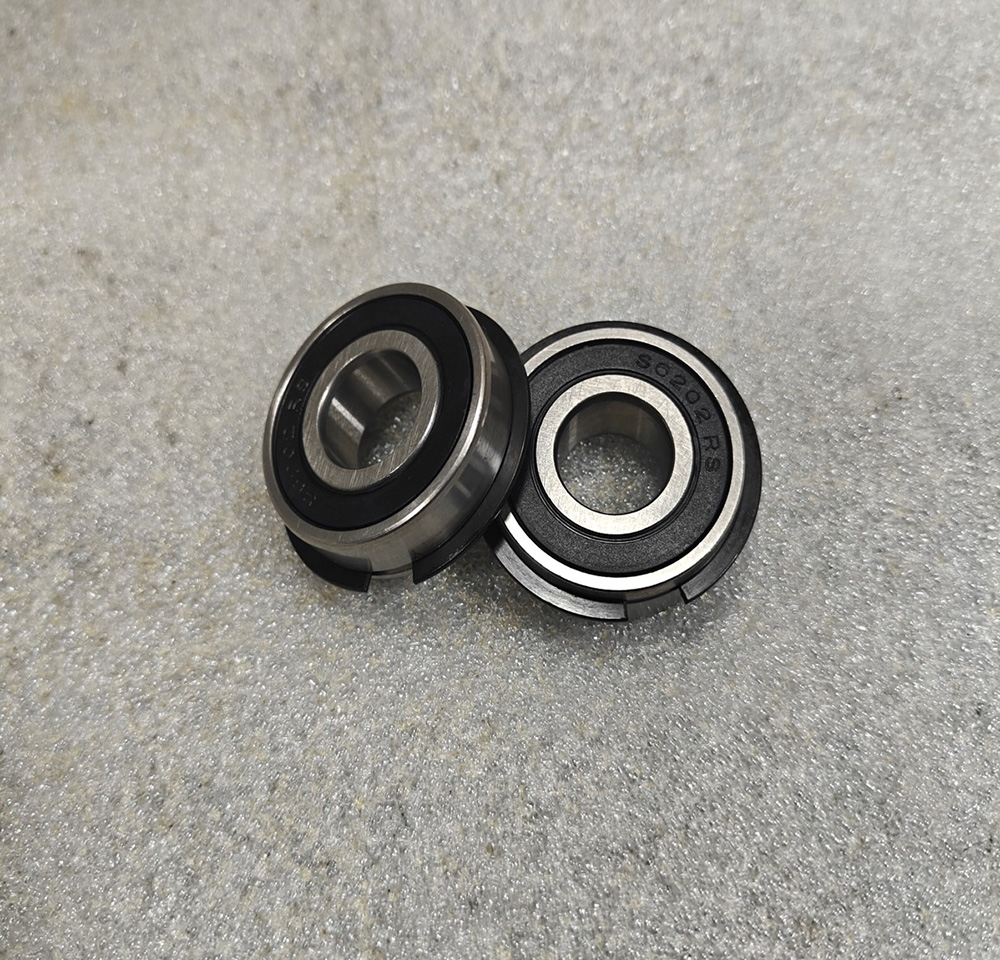
Abnormal motor noise. A bearing shifting in its housing. The culprit is sometimes not the bearing itself but a few-gram retaining ring. Deep groove ball bearings with a retaining ring (often marked with the "NR" suffix) seem to have only an extra groove and one small part—yet that part plays an irreplaceable role in axial location.
1. What Problem Does It Solve?
After a deep groove ball bearing is installed in a housing, it may shift axially within the bore if the housing is difficult to machine with a shoulder. The retaining ring (also called a snap ring) solves this: it snaps into a pre-machined groove on the bearing's outer ring, and once seated, its protruding outer diameter engages the corresponding groove in the housing bore, limiting axial displacement. One small elastic ring replaces a shoulder that would be hard to machine—and delivers reliable location. Note that this is axial location within a bore, different from the circlip used on shafts.
2. Assembly and Disassembly
Assembly. Retaining rings are elastic. A special tool is usually needed to spread or compress the ring so it deforms and snaps into the outer-ring groove. Never strike the bearing rings directly to force installation—this can damage the raceways and shorten bearing life.
Disassembly. Some designs feature tabs or lugs that a tool can pry. Insert a tool into the gap and use leverage to lift the ring out of the groove.
3. Application Boundary: Limited Axial Capacity
Deep groove ball bearings with retaining rings (especially those with filling slots) may have a higher ball count and good radial capacity, but their axial load capacity is generally limited. Ensure the bearing primarily carries radial loads, and avoid using the ring as the load-bearing part for major axial thrust. Its locating and load-bearing functions should be strictly distinguished.
4. Selection and Installation Tips
Confirm the model carries the "NR" suffix and that the ring matches the housing bore groove dimensions. Before assembly, check the groove and ring for deformation or burrs. If significant axial forces are involved, re-evaluate the locating scheme rather than relying on the ring to carry thrust. Consult product catalogs or technical personnel for specific selection.
5. Conclusion
Though small, the retaining ring is key to axial location in deep groove ball bearings. Understanding its principle, standardizing assembly and disassembly, and clarifying its load boundaries let this small component deliver its due value. Stay tuned for more on bearing accessories and installation.